01The price is never just the price
Two words on a pro-forma invoice that determine who owns the risk — and who pays to move it.

A seller quotes a price. A buyer agrees. At that moment, very little has actually been settled. What neither has yet addressed is the question of where and when the transaction is, in a legal sense, complete — at what point the object stops being the seller's problem and starts being the buyer's.
"Ex works" answers that question in the sharpest possible way: the seller's responsibility ends at the studio or storage door. The work is yours the moment you arrange its collection. The crating, the freight forwarder, the insurance, the customs paperwork, the import duties at the destination — every one of those is the buyer's to commission, pay for and get right.
The phrase comes from international trade law, where the Incoterms framework (published and updated by the International Chamber of Commerce) provides a standardised vocabulary for exactly these moments of transfer. Ex works, abbreviated to EXW, sits at one extreme of that spectrum: maximum responsibility for the buyer, minimum for the seller. At the other end, something like DDP — Delivered Duty Paid — means the seller handles everything up to the buyer's door. Most art transactions land somewhere in between those poles, but EXW is the one galleries and estates reach for most naturally, partly because it is simple, partly because it is safe for the seller.

02What it decides, in practice
Say a gallery in London sells a work to a collector in New York. The invoice says "ex works, London." That phrase carries significant weight. The gallery's obligation is to have the work ready for collection, properly accessible, at the address given. Everything after that moment — a travel frame or a crate, export documentation, any export licence the UK requires for older or significant works, the freight, the marine or air cargo insurance, US customs, any import duties, final delivery to the collector's address — falls to the buyer. If the crate is dropped on a runway, that is the buyer's claim to make, against the buyer's insurance policy.
This is precisely why condition reports matter so much, and why they are issued before a work leaves the seller's premises rather than after. Once the work has gone ex works, the seller's ability to influence what happens to it is over. The report is their record that whatever the buyer receives in New York is whatever left London.
Say a gallery in London sells a work to a collector in New York.
For the buyer, understanding ex works means understanding that the quoted price is genuinely a floor. A significant work travelling internationally will need a purpose-built crate, specialist art handlers on both ends, cargo insurance — typically a percentage of the insured value — and potentially import duties that vary by country and material. None of that appears on the gallery invoice. A collector buying ex works for the first time sometimes discovers that getting the work home costs as much as a tenth of what they paid for it, occasionally more.
Galleries favour EXW for a practical reason: they know their premises, they know how to present the work for collection, and they have no control over how a buyer's shipper handles things once they leave. Taking responsibility for transit means taking on risk they cannot manage. Smaller galleries especially will default to ex works simply because arranging international freight for a single sale is genuinely difficult, and getting it wrong — a damaged work, a customs delay, a misclassified import — creates liability they are not equipped to absorb.
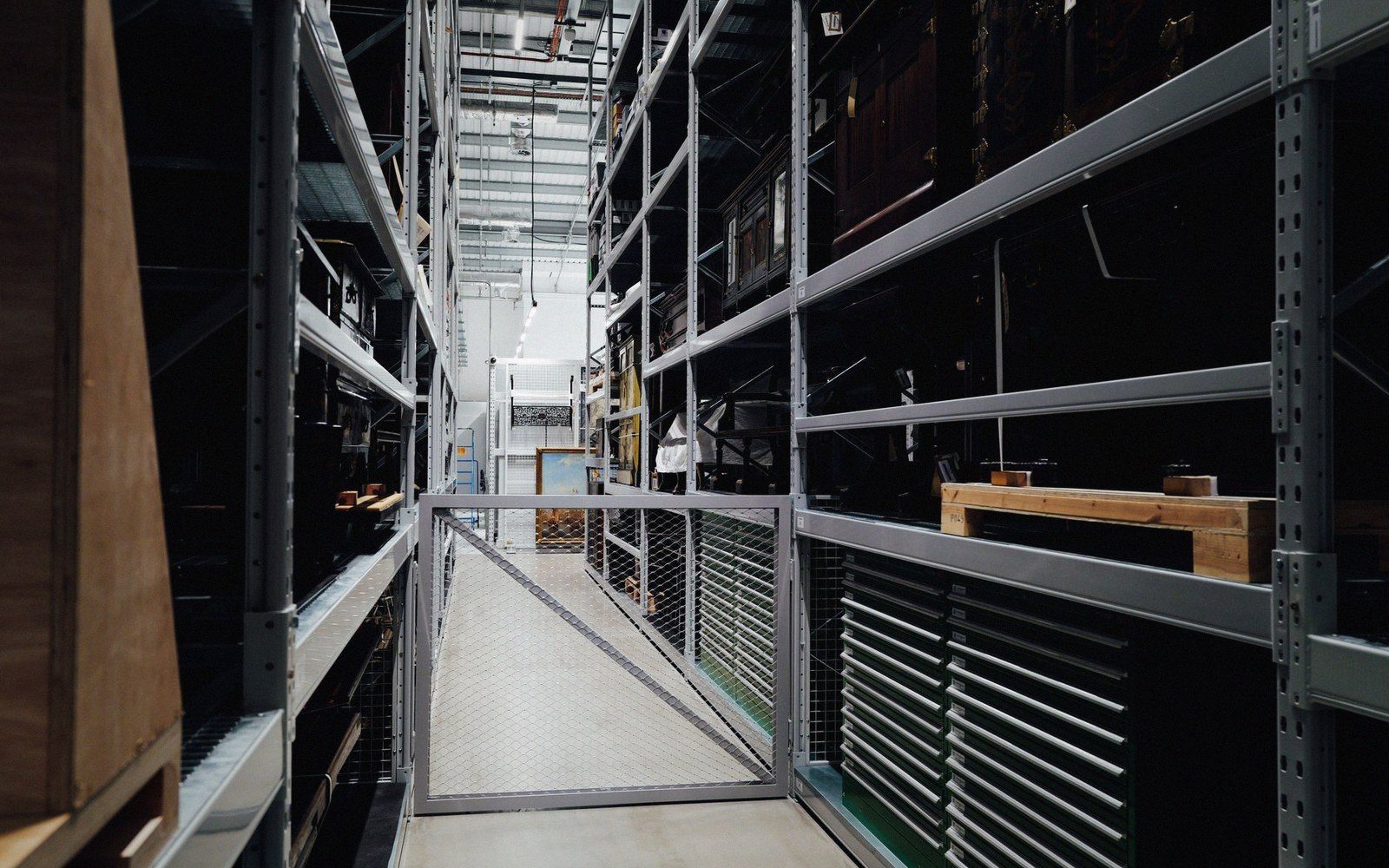
None of this means a buyer is helpless. Specialist art shippers work this terrain constantly. The practical infrastructure — from nail-to-nail insurance policies to customs brokers fluent in temporary admission mechanisms — exists precisely to make ex works transactions manageable. But a buyer needs to know to engage it. The phrase on the invoice is, among other things, a prompt: the logistics are yours to organise, and the moment to organise them is before collection, not after.
Consignment is an independent guide to how the art market operates. It is not a gallery, dealer, auction house, fair or advisory service.