
01The work is in the country, but legally it is not
When a gallery crates up three paintings and flies them to a fair in another country, it faces a customs problem with an elegant solution. The work has to cross the border. But if it is treated as an import — as goods entering commerce in that territory — the gallery may owe customs duties and, depending on the jurisdiction, value-added tax or a local sales levy on the full retail value of everything in the crate. On a booth hung with six-figure work, that exposure is not theoretical. It would make international fair participation financially ruinous for anyone below the scale of the largest houses.
The solution most countries have agreed on is called temporary admission — sometimes temporary importation, or in some European contexts the ATA Carnet system, named for the combined French and English phrase admission temporaire/temporary admission. The mechanism is simple in principle: the works enter the territory not as imports but as goods in transit for a declared, time-limited purpose. They come in, they are displayed, and they leave. No duty is charged, and VAT is suspended for the duration, because the tax event — a sale into that economy — may never happen.

In practice, this requires documentation before the work moves. The ATA Carnet is the most widely used instrument. It is issued by a chamber of commerce or designated national authority, and it functions as a passport for the goods: a single document accepted in over eighty countries that records what is in the shipment, what it is worth, and when it must leave. Customs officers stamp it on exit from the originating country and again on entry to the destination, and the shipper must present it again on re-export. If the carnet is not discharged — if the goods do not demonstrably leave — the issuing authority can be called on to pay the duties that would have been owed.
Freight handlers who work the fair circuit manage carnets as routine; for a gallery new to international fairs, the carnet is the piece of paperwork most likely to cause a delay at the border if it is wrong.
02When the work sells
This is where temporary admission becomes a genuine complication rather than a paperwork convenience. The mechanism is designed for works that travel and return. A sold work does not return. The moment a sale is agreed, the legal basis on which the work entered the country begins to collapse.

The gallery cannot simply hand the work to the buyer at the close of the fair and consider the transaction done. Doing so would mean the work has been permanently imported without going through import clearance — a customs violation, and potentially a VAT or sales-tax liability that now falls on whoever can be made responsible.
The standard handling is to process the sale as an ex works transaction, or to formally re-export the work and re-import it correctly. In the ex works model, title passes to the buyer at the point of collection in the country where the fair is held, which means the buyer is technically importing the work and takes on the customs obligations. In practice, the gallery's shipper manages this, filing the appropriate import entry after the fair, accounting for applicable taxes. Some buyers — particularly institutions and those buying through advisories — have bonded accounts or arrangements that make this straightforward. Private buyers buying for the first time across a border are sometimes surprised to receive a second invoice from a freight company weeks later.
An alternative used for high-value or sensitive works is re-exportation followed by formal importation: the work leaves on the return shipment with everything else, the carnet is discharged cleanly, and a separate shipment is arranged for the buyer. This adds cost and time but produces a clean customs record.
The gallery cannot simply hand the work to the buyer at the close of the fair and consider the transaction done.
Certain jurisdictions have simplified procedures for fair sales. Switzerland has its own import regime closely associated with the Basel market; the United States has a formal entry process that experienced art shippers handle at JFK and Los Angeles for works arriving for TEFAF New York, the Armory Show, Frieze, and others. The European Union's unified VAT territory simplifies movement within it considerably, though a London-based gallery shipping to any EU fair since 2021 faces the same carnet requirements that non-EU shippers always did.
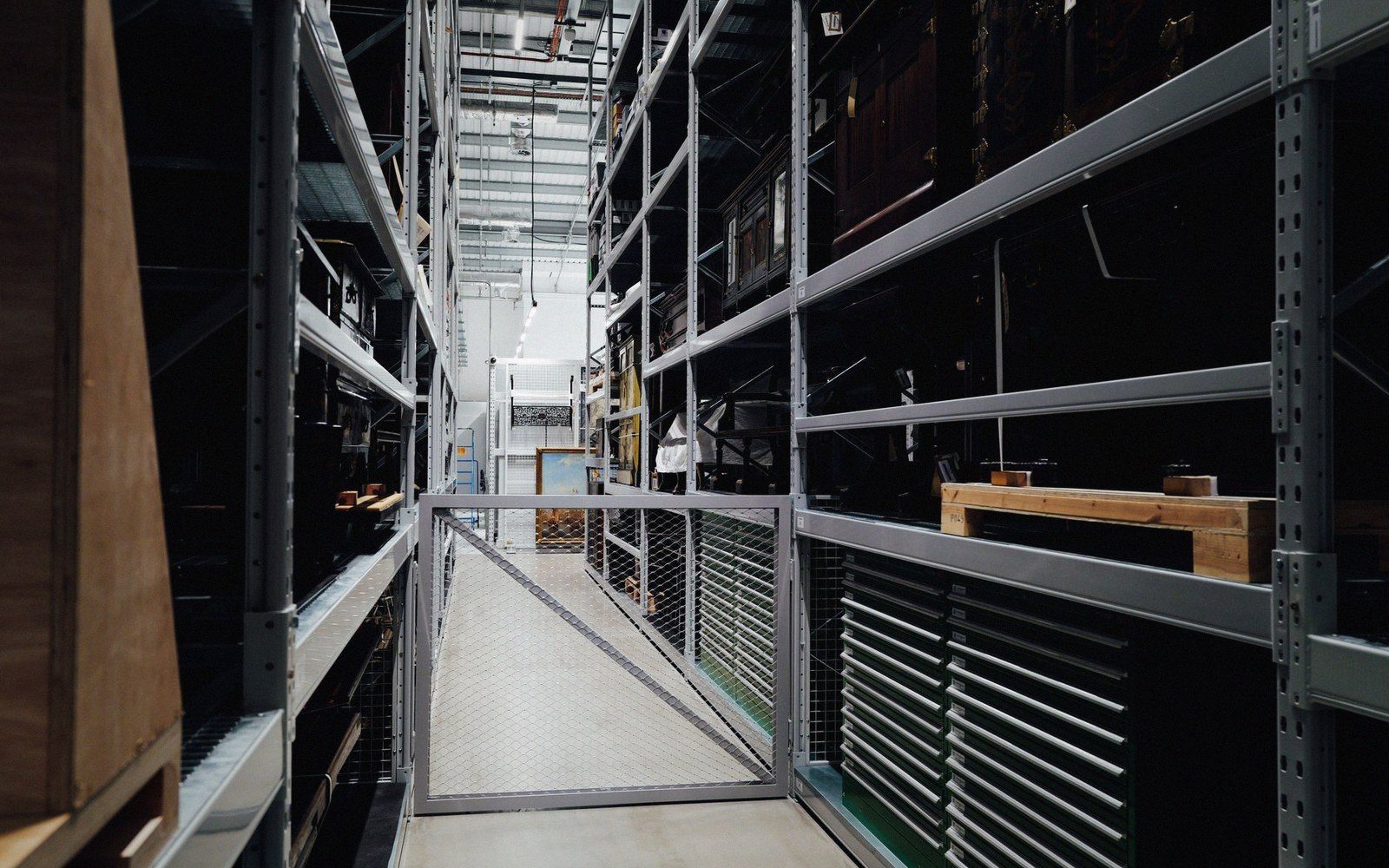
Freeports occupy an adjacent but distinct position. A work in a freeport has not been formally imported into the domestic customs territory, which is structurally similar to temporary admission — but the work is in storage, not on a booth wall. The commercial logic is different even if the legal suspension of duty is related in principle.
What temporary admission reveals, more than anything, is that the geography of the art market is not quite the same as the geography of the world. A painting can be in Basel, fully present and available to be sold, while remaining, in customs terms, still in New York. The fair makes this possible. The carnet makes it documented. And the shipper, stamping papers at the loading dock before the vernissage, is the person who actually holds it together.
Consignment is an independent publication about the art market. It is not a fair, gallery, dealer, auction house or advisory service, and nothing here constitutes advice on buying or selling.