
01The Number on the Invoice
Start with the bill. A booth at Art Basel in Basel — the benchmark fair, the one galleries cite when they talk about "the top" — runs from roughly CHF 18,000 for the smallest stand to well over CHF 100,000 for a corner position in the main hall. Those are the stand fees alone, paid to the fair organizer before a single work leaves the gallery. Frieze London charges in British pounds; the figures are comparable in scale. A mid-tier space at either fair, somewhere between the entry-level closets and the palatial anchor positions, typically lands between CHF 40,000 and CHF 70,000 in stand rental. That number buys the walls and the floor. It does not buy much else.
What comes next is where galleries are sometimes caught underprepared. Freight — crating, shipping, insurance in transit, and the local handling at the fair's loading bay — routinely adds thirty to fifty percent on top of the stand fee for an international shipment. Then there is hotel accommodation for at least two or three staff for the duration, flights, per diems, printed materials, lighting adjustments to the booth, any bespoke installation elements, and the client entertainment that is inseparable from the fair week itself. A gallery that pays CHF 50,000 for its stand might walk away with a total outlay of CHF 120,000 or more once the complete balance sheet is drawn up. For a gallery with annual revenue under a million, that is not a line item; it is an existential commitment.
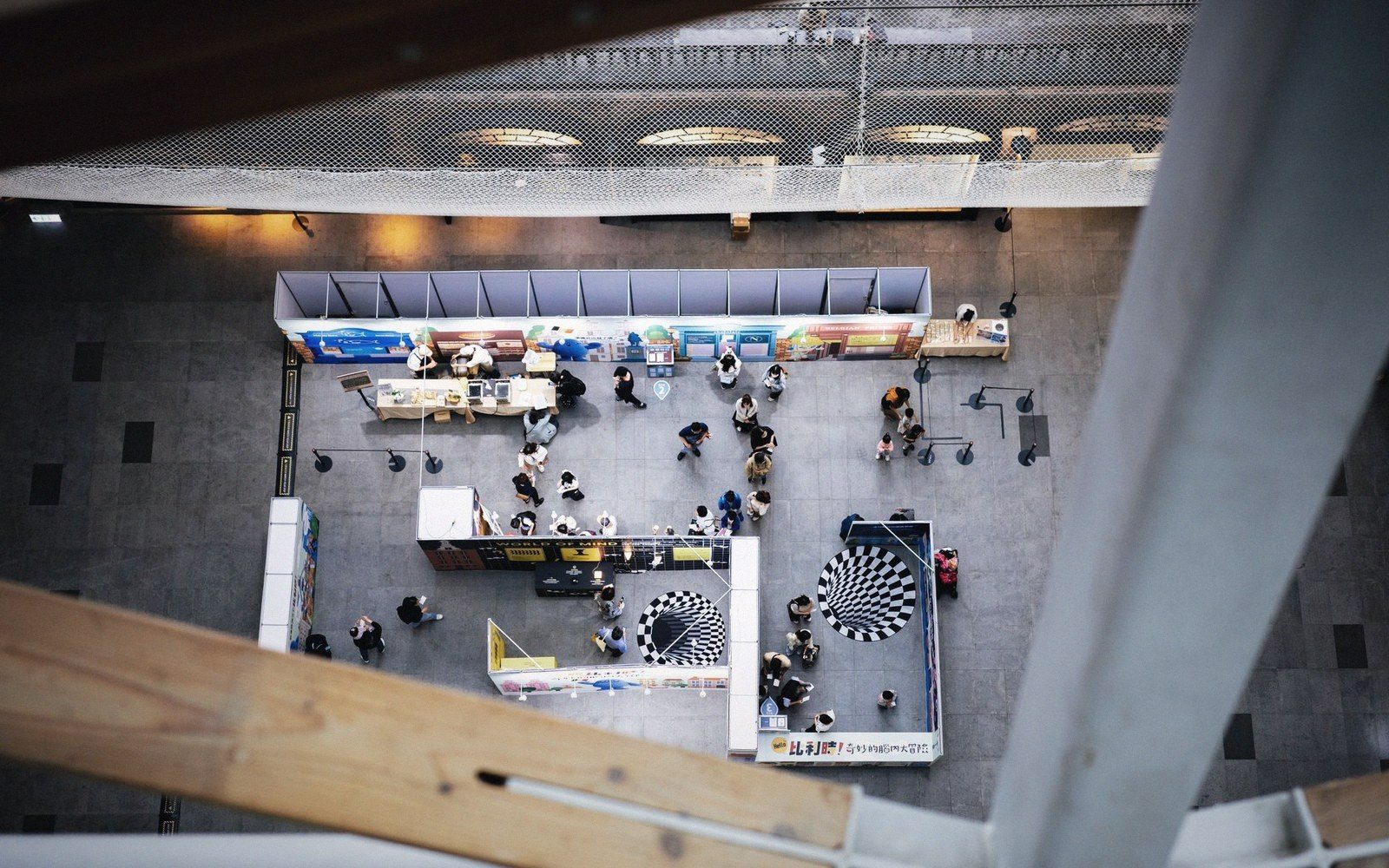
NADA Art Fair, Untitled Art Fair, and the satellite events that cluster around the major weeks offer smaller galleries a lower entry point — booth fees in the low thousands rather than the high tens of thousands — but the structural logic is identical. The booth is a temporary retail space that is almost never justified by the retail it generates in the aisle.
02What the Booth Is Actually Buying
This is the part that sounds counterintuitive until you have been inside it. A gallery does not attend a fair primarily to sell work to strangers who happen to walk past. That happens — sometimes it happens a great deal — but it is not the organizing logic of the decision to apply, pay, ship, and staff.
A booth is a scheduled appointment with a very specific audience: the curators, directors, and trustees of institutions who attend fairs in concentrated form during fair week; the collectors who are otherwise inaccessible by phone or email but who walk every booth in the VIP preview hours; the journalists and critics who will see fifty galleries' programs in three days and decide what is worth writing about; and the other gallerists, from other cities and other rosters, whose sense of your program shapes whether they recommend you to their own clients. That audience does not number in the thousands. It numbers, for any given booth, in the dozens — fifty people, perhaps, or a hundred — who will stop, look, and form a judgment that will persist for the next year or two.
The fair is a compression device. It collapses a year's worth of studio visits, vernissage invitations, and cold emails into a four-day window in which the people who matter are all in the same building. A gallery that operates out of a city with little institutional infrastructure — not New York, not London, not Basel — can use one week at a major fair to make itself legible to a global audience that would otherwise never encounter it. The booth is the infrastructure it cannot otherwise afford.
This is also why hanging a booth is treated with the same seriousness as hanging a gallery show, and sometimes more. The selection of works, their sequence, and the argument they make about an artist's direction are read by people who will draw lasting conclusions from them. A poorly chosen presentation does not just fail to sell; it can actively damage a gallery's standing with exactly the audience it most needs to impress.
03The Calculus of Commitment
How do galleries justify this to themselves, financially? The honest answer is that most of them do so imprecisely, because the return is largely unquantifiable in the short term.
A sale made in the booth is legible: work sold, price achieved, invoice raised. But the collector who sees a work on Tuesday, calls the gallery in February, and buys something from the next show — that sale does not appear in the fair week ledger. Neither does the museum acquisition that begins with a curator's conversation at the booth and concludes with a committee vote eighteen months later. Neither does the review, the inclusion in an institutional survey, the invitation to a residency program. The fair's actual return on investment, for a gallery that is doing it correctly, has a tail measured in years.
What galleries try to track, imperfectly, is whether the booth paid for itself in direct sales plus something toward the intangible. A fair at which a gallery sold nothing and made no new institutional contacts is a failure by any honest accounting. A fair at which a gallery sold moderately but placed a work with a major museum and had a productive conversation with three new collectors is a success, even if the sales alone would not have covered the stand fee. The proportion of the cost that must be recovered directly varies by gallery size: larger galleries, which have deeper reserves and can absorb a slow fair, are willing to treat the entire cost as a marketing expense; smaller galleries, which cannot, need the booth to at least partially pay its way.
A sale made in the booth is legible: work sold, price achieved, invoice raised.
The fair calendar compounds this pressure. A gallery committed to multiple fairs per year is not making one large bet but a series of successive ones, each with its own freight bill, its own hotel block, its own demand on the director's time. The calendar is a strategy, and an expensive one to execute badly.
04The Application, and the Politics of the List
There is a detail that the fair's public face obscures: you cannot simply buy a booth. The major fairs operate selection committees that assess gallery applications against criteria that include the length of the gallery's operation, the institutional recognition of its artists, the quality of its previous fair presentations, and, less explicitly, the overall composition of the fair they are trying to build. A gallery applying to Art Basel for the first time is unlikely to receive a main-sector position regardless of what it offers to pay. It may be offered a position in a newer-artist sector — the Statements sector, structured specifically to provide a route in for galleries that have not yet accumulated the track record the main hall requires.

This gatekeeping is not incidental to how the fair functions. It is central. The fair's value to galleries depends on the fair being credible to the collectors and institutions it wants to attract. That credibility depends on the fair maintaining some editorial control over who is in the building. The application process is how the fair protects its own product.
The result is that the fair economy has a hierarchy that roughly mirrors the gallery hierarchy, with the major international galleries occupying the large corner stands and the emerging galleries clustered in the sector positions that offer lower fees and smaller footprints. The hierarchy is not perfectly rigid — galleries move through it over time, and a strong run of institutional recognition can accelerate that movement — but it is real, and any gallery that ignores it when planning its fair strategy will learn about it through rejection.
05What the Booth Cannot Do
None of this means the booth is always the right answer. For a gallery at a certain stage, the combination of stand fee, freight, staff time, and client entertainment represents a cost that would be better deployed elsewhere — a catalogue, a museum loan, a more ambitious home program. The booth is not the only way to reach the concentrated audience of fair week. Some galleries attend as guests of other galleries' programs, or host dinners and events in rented spaces near the fair without paying for a stand.
The booth is a powerful tool and a genuinely expensive one. It buys visibility to a small number of people who are disproportionately consequential. Whether that is worth the invoice depends entirely on which fifty people walk through — and on what the gallery has prepared to show them.
Consignment is an independent publication about how the art market works. It is not a fair, gallery, dealer, auction house, or advisory service, and nothing here constitutes advice on buying or selling.