01The room is not the public
The opening hours of any major art fair are not open to the public. They are, depending on the fair, a VIP preview, a vernissage, a first-morning slot for invited collectors — and the people in that room are the reason a gallery director flew across an ocean with a shipping crate and a team of three. By the time the general ticket-holder walks in on day two or three, several works are already sold, a red dot has appeared next to the piece that anchored the whole booth, and the gallery is deciding whether to re-hang.
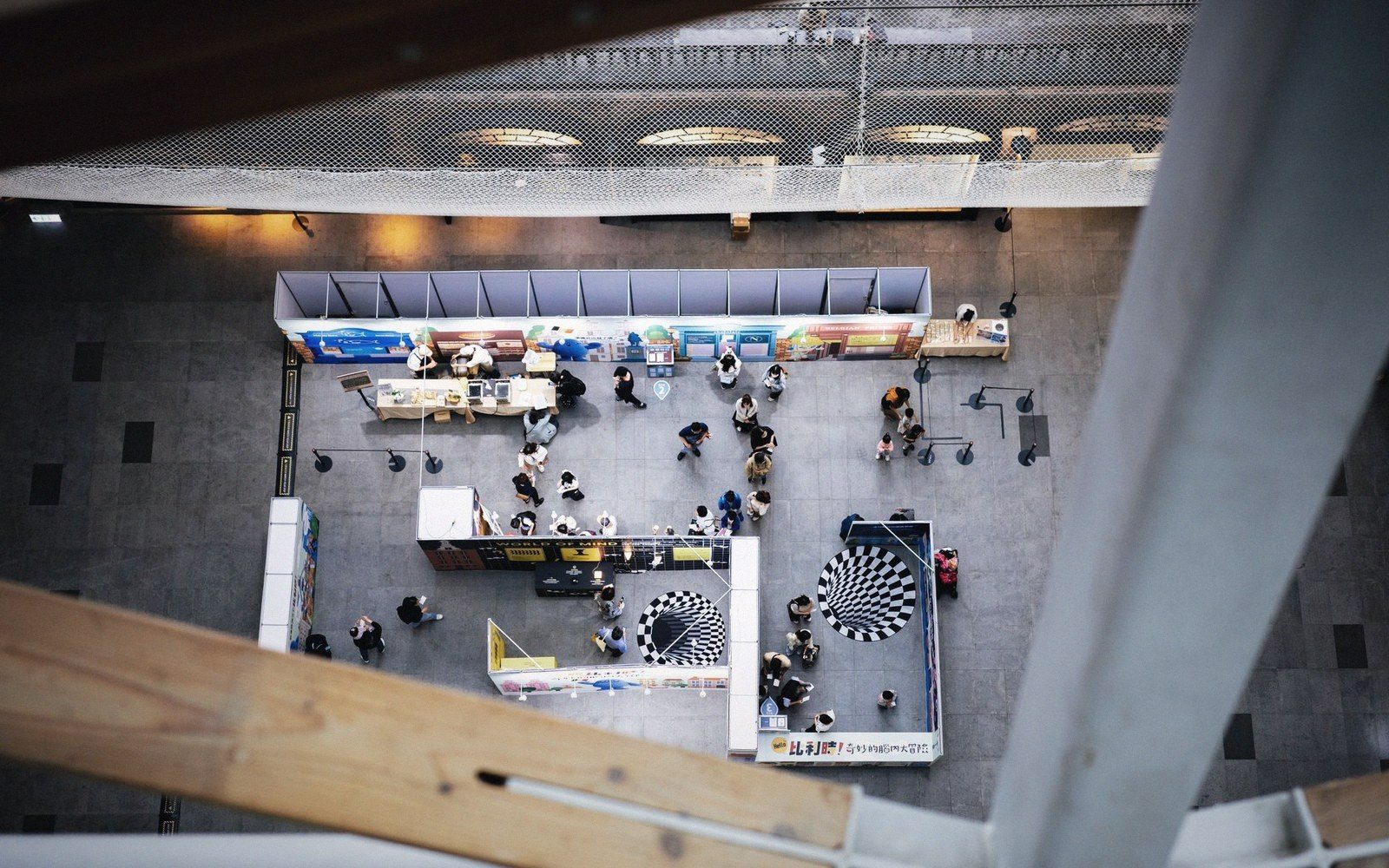
Understanding who buys at a fair, and when, is really understanding that the fair operates on two timelines simultaneously: the compressed, high-stakes hours of the preview, and the longer public run that serves different purposes almost entirely.
02The buyers in the room
The collector who appears at 11 a.m. on preview day and places a work before lunch is almost always someone with an existing relationship with the gallery. They have seen the artist's work before, in some cases in the studio. They may have bought from this gallery at a previous fair, or been sent studio images in advance. The sale is not impulsive — it has been in preparation for weeks. The fair is, in this sense, the closing ceremony for a conversation that started elsewhere.
Alongside the collectors are the advisors: professionals who act on behalf of clients who do not attend fairs themselves, or who prefer to have a trusted intermediary do the looking. An advisor may walk the preview with a shortlist prepared before arriving, place holds on three works simultaneously, and report back to clients in different time zones before making a final call. Their presence is why galleries sometimes hold a work for forty-eight hours without a firm commitment — the advisor's client is the real decision-maker, and they are unreachable until Tuesday morning.
Museum curators and institutional buyers occupy a third category. They rarely buy at the fair itself, or not immediately; the acquisition process at a public institution involves committees, budgets and trustees, none of whom are standing in the booth. What curators do at a fair is look, note, and return — sometimes years later. A gallery that logs which curators visited and what they lingered over is gathering intelligence that shapes how the artist's work is placed and priced going forward.
Then there are the browsers: engaged, financially capable, emotionally interested, and almost entirely unlikely to buy. They are not wasting the gallery's time — one of them may become a buyer at the next fair, or after a studio visit arranged in the months following. But they are not the reason for the first-morning scramble, and experienced booth staff know how to read the room accordingly.
03Why the first hours close more than the rest
The preview's scarcity is not manufactured — it is structural. The most significant works in a booth are chosen because they represent the artist at a particular moment, and there is one of each. A collector who wants a specific piece has to decide before someone else does, and the preview concentrates that pressure into a window of two or three hours. Galleries exploit this by ensuring that their most committed collectors know in advance what will be in the booth, sometimes sending installation previews or even doing a walk-through by video call the night before.
Then there are the browsers: engaged, financially capable, emotionally interested, and almost entirely unlikely to buy.
The dynamic creates what is essentially a race with good manners. Holds are placed, galleries field simultaneous inquiries on the same work, and the negotiation over who gets preference when two serious buyers want the same piece is one of the more delicate social tasks in the trade. Placement history counts: a collector who has acquired work that was well cared for and later loaned to institutions will generally take precedence over an unknown buyer at the same price. The fair accelerates the process, but the values that determine outcome were established long before anyone arrived.
After the preview, what happens in the remaining public days is real but quieter. Works at lower price points move — editions, works on paper, smaller pieces that were always intended for a different buyer profile. Conversations are started that become sales months later. Relationships are maintained. And galleries use the foot traffic to assess which artists draw sustained attention, information that feeds directly back into how the program develops. Hanging a booth is partly an exercise in managing exactly this — what reads from fifteen feet, what rewards closer attention, and which work functions as the anchor that signals seriousness to everyone who walks in.

The fair, in the end, is not a shop that happens to have expensive inventory. It is a concentrated moment of market contact, designed around the people most likely to act — and most able to — in the narrowest possible window. Everything else is context.
Consignment is an independent publication about how the art market works. It is not a gallery, fair, dealer, auction house or advisory service, and nothing here constitutes advice on buying or selling art.