01The work you never see is probably still for sale
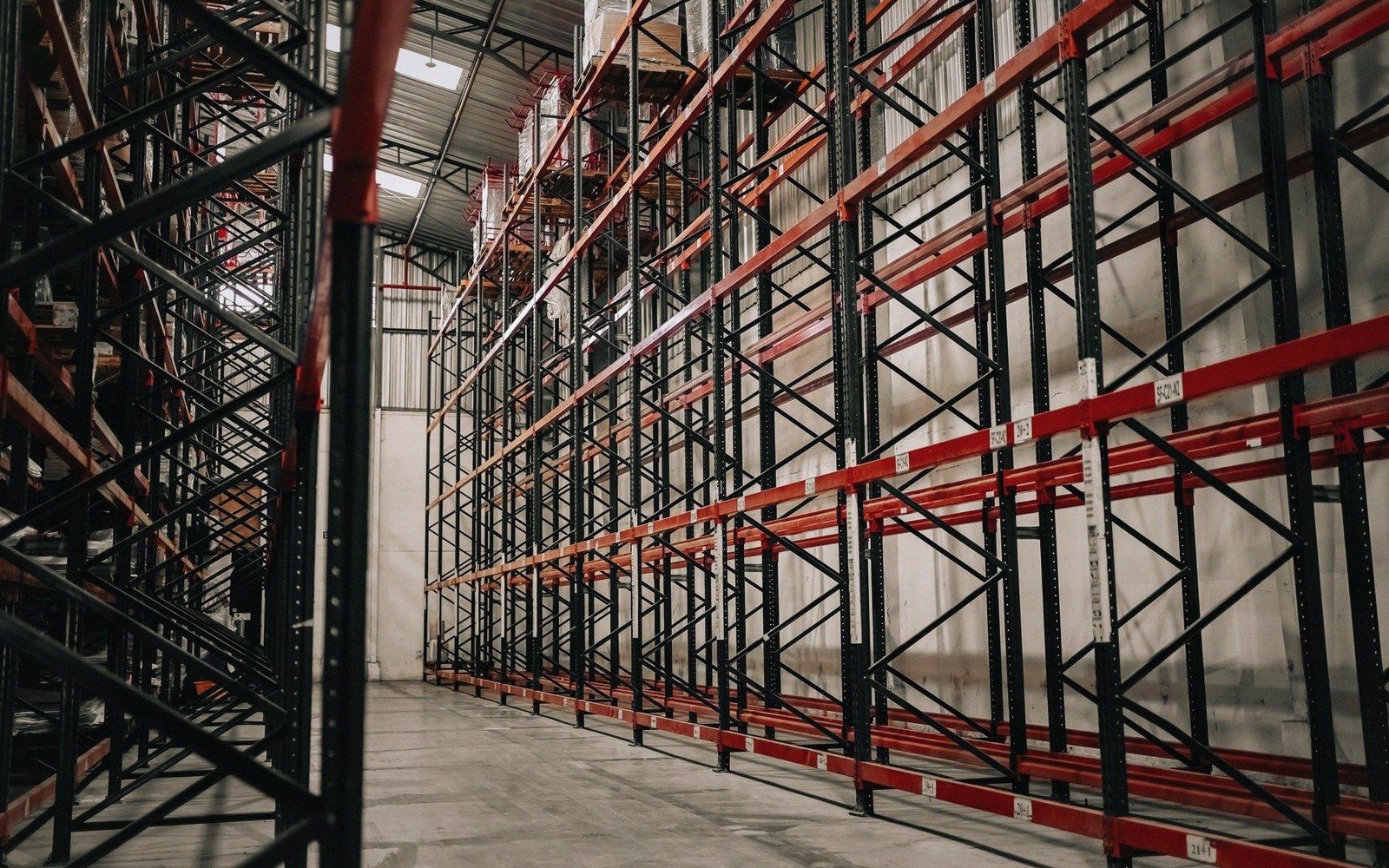
Walk into any serious gallery and you will see, at most, a dozen works. Walk into its back room — or, more likely, its off-site storage facility — and you might find three hundred. The ratio is not unusual. The overwhelming majority of works in the art market exist not on walls but in racking: vertical slots in climate-controlled warehouses, works wrapped and padded, waiting in near-darkness for a placement, a sale, or the logistics of an upcoming fair. Ownership of art is, in practice, mostly custody of stored objects. The wall is the exception.
This is not dysfunction. It is structure. A gallery holds works on consignment, which means the artist retains ownership and the gallery holds physical custody. The gallery's job is to find the right placement at the right time, not to move work as fast as possible. Showing everything at once would produce neither good placements nor a coherent program. So most of what a gallery represents sits, at any given moment, in storage — and the infrastructure required to do that properly is substantial, technical, and expensive.
02What the infrastructure actually is
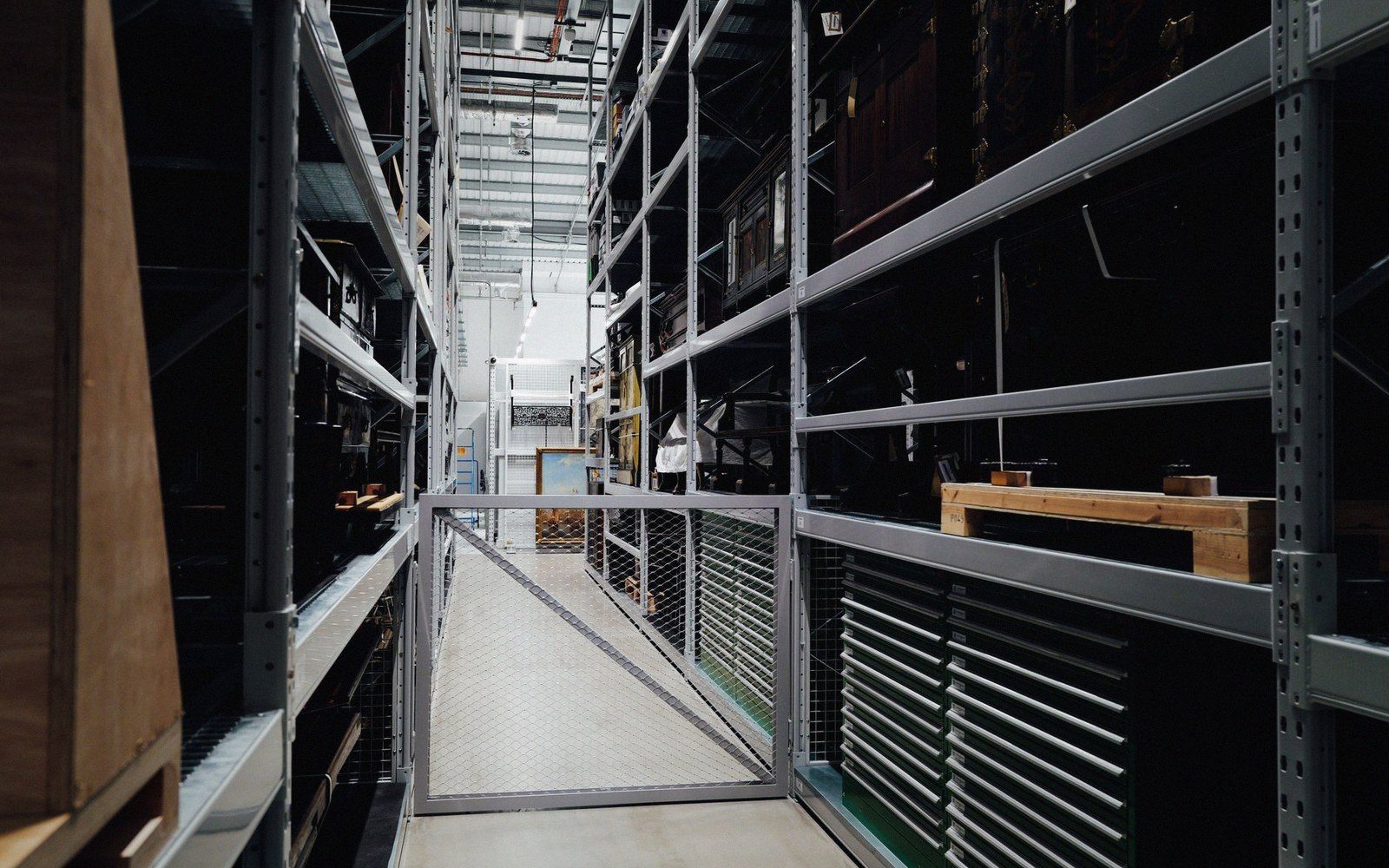
Serious art storage is not a garage. It is a controlled environment where temperature, relative humidity, and light levels are held within the ranges that different materials require. Paintings on canvas typically want a relative humidity between roughly 45 and 55 percent, with temperature held steady around 65 to 70 degrees Fahrenheit; fluctuation is more damaging than any single reading, because it causes the canvas, ground, and paint layers to expand and contract at different rates. Works on paper are more sensitive still. Photography, depending on the process, can be more demanding than either.
The physical infrastructure reflects this. Racking systems — the vertical slotted frames in which canvases are stored — are designed to keep works upright and separated, padded at contact points, never touching each other or a hard surface. Larger facilities use compactable rolling racking to maximize floor space without stacking. Sculpture and oversized works occupy purpose-built bays or crates stored in dedicated zones. Access is logged: who took what, when, and why, because a chain of custody is not just good practice but part of the condition report record that follows a work through its commercial life.
Climate control is the largest ongoing cost. The systems run continuously, and any power interruption is a crisis. Serious facilities have redundant HVAC and backup generators; some operate with twenty-four-hour monitoring services that alert staff if humidity drifts by more than a few percentage points. The result is that storing art well is genuinely expensive infrastructure — not a marginal cost but a fixed one, regardless of whether a single work in the facility moves in a given month.
03What it costs, and who pays
Storage costs vary enormously by location, facility tier, and the physical character of the work — its size, fragility, and whether it requires special handling. In major art-market cities, monthly storage at a serious facility can run from a few dollars per square foot for racking to multiples of that for climate-controlled crated storage of large or fragile works. A gallery managing a roster of thirty artists, each represented by multiple works, might easily spend tens of thousands of dollars annually on storage before a single work moves.
The question of who bears this cost is not always obvious, and the answer is embedded in the consignment agreement rather than in any industry-wide rule. In most gallery arrangements, the gallery absorbs storage costs as part of the overhead of representation. The artist delivers; the gallery stores, insures, and handles. But when works travel — to a fair, to a museum loan, to a viewing at a collector's home — nail-to-nail insurance kicks in, and those costs are typically allocated differently, often to the gallery as part of fair expenses, sometimes shared or passed to the collector for a loan.
Freeport storage — in bonded facilities at Geneva, Singapore, Luxembourg, and elsewhere — adds a distinct layer. Works in a freeport sit outside customs territory, which has real logistical utility for works that move between international owners without being formally imported into any jurisdiction. The storage conditions at the major freeports are serious; the Geneva facility in particular has long been used by dealers and collectors for exactly the climate-controlled, access-logged environment described above, compounded by the tax and customs position. Freeport costs are higher, and the arrangement suits large-value works more than it does a mid-career gallery's working inventory.
04What it means that ownership is mostly custody
Here is the less obvious implication: if most art is in storage, and storage is the dominant physical experience of ownership, then owning art is largely a matter of managing records and logistics rather than living with objects. For the collector who buys a significant work and places it in a managed facility, the primary relationship with that work may be financial and administrative. The work may hang in their home for a period; it may go to a fair, a museum loan, or a viewing room; but measured in days per year, it probably spends more time in a rack than on a wall.
The question of who bears this cost is not always obvious, and the answer is embedded in the consignment agreement rather than in any industry-wide rule.
This is not a corruption of what art ownership is supposed to be — or not entirely. Major collectors have always managed large holdings that exceed their display capacity. What has changed is the scale and the infrastructure around it, and the degree to which storage has become a service industry in its own right. Facilities like Crozier Fine Arts, UOVO, and Atelier 4 in the United States, or Crown Fine Art and Momart in the United Kingdom, are not simply warehouses. They offer condition reporting, photographic documentation, installation services, collection management software, and in some cases curatorial support. Storage has become collections management, and collections management has become a business.
For galleries, this infrastructure shapes how they think about their programs. A work that is not moving — that has been on offer to collectors for eighteen months without finding a placement — still occupies physical space, still incurs monthly cost, still requires insurance. At some point the economics of holding push a gallery to reconsider terms with the artist, reduce the price, or return the work. Storage costs are invisible in most accounts of the art market, but they are among the quieter pressures that shape how long a gallery will carry a body of work before the relationship changes.

For artists, the practical consequence is that the studio is rarely the last stop before the wall. Work moves from studio to art handler to storage to viewing room or fair booth to storage again, possibly back to the studio for restretching or repair, and eventually — ideally — to a collection. At each of those transitions, paperwork should follow it: condition reports, insurance riders, customs documentation if it crosses a border. The physical journey of a work from completion to permanent placement can span years and thousands of miles, with storage as the connective tissue between the visible moments.
The result is that the art market's physical infrastructure is mostly hidden. The things that make it work — the climate-controlled racks, the padded dividers, the access logs, the redundant compressors running overnight — are not part of the story that gets told about art. The story is the opening, the fair booth, the auction room. But the auction room is forty minutes of a work's life. Storage is the rest of it.
Consignment is an independent publication about how the art market works. It is not a gallery, fair, dealer, auction house, or advisory service, and nothing here constitutes advice on buying or selling art.